


Fairfax Assault Attorney: Your Legal Guide Through Charges

TL;DR:
  • Being arrested is not a conviction. You are presumed innocent.
  • In Fairfax County, assault cases begin in General District Court or J&DR for family-related matters.
  • Know your release conditions, court dates, and how to preserve helpful evidence.
  • A Fairfax assault attorney can evaluate the charge, potential defenses, and ways to work toward the best available resolution.
An arrest can feel overwhelming. Papers, deadlines, and terms you’ve never heard of show up all at once. A Fairfax assault attorney can help you slow things down, understand the process, and decide on the next step that makes sense for you. This guide is for people facing assault allegations in Fairfax County, Virginia. We’ll cover what to do right away, how the local courts work, what the charge means under Virginia law, and practical paths that respect your rights and the presumption of innocence.

What Is Assault In Virginia?

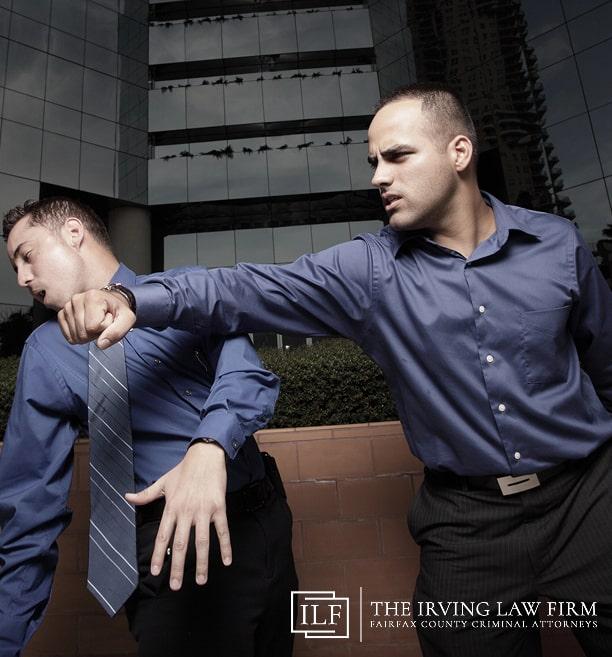
Assault is an act intended to make someone reasonably fear immediate harm, and battery is any unlawful, offensive touching. In Virginia, prosecutors may charge either simple assault or assault and battery, based on the evidence, as Class 1 misdemeanors under Va. Code § 18.2-57, punishable by up to 12 months in jail and a fine under § 18.2-11.

If the allegation involves a family or household member, the charge is domestic assault under § 18.2-57.2. Certain circumstances raise the stakes. For example, assault on a law enforcement officer is a Class 6 felony under § 18.2-57(C), and other aggravated conduct can trigger felony penalties outlined in § 18.2-10. You are presumed innocent, and the Commonwealth must prove every element beyond a reasonable doubt.

Fairfax Assault Charges & Possible Penalties

Before you can make good decisions, you need to know exactly what the Commonwealth says you did and what the paperwork actually means.

Most first-time assault & battery charges are misdemeanors. Some facts can raise the stakes. For example, assault & battery on a law-enforcement officer is a felony with mandatory minimum jail time under Va. Code § 18.2-57(C).

The charge can also escalate if a serious injury is alleged or certain protected roles are involved. Your attorney will compare the paperwork to the facts to confirm whether the Commonwealth can actually prove the elevated elements.

What Are The Penalties For Assault In Virginia?

Virginia sets penalty ceilings by class. Here’s a quick snapshot of what the statutes allow if a judge imposes the maximum:

Charge Type
Statute
Range
Class 1 misdemeanor (e.g., assault & battery)
Va. Code § 18.2-57; penalties in § 18.2-11
Up to 12 months in jail and up to a $2,500 fine
Felony (general framework)
Penalties in Va. Code § 18.2-10
From 1 year to decades in prison, depending on the felony class
These are statutory ceilings, not automatic outcomes. Sentencing depends on evidence, history, and what the court hears at the end of the case.

Collateral Consequences To Consider Early

Criminal cases can affect immigration status, security clearances, professional licenses, and employment background checks. Even pretrial conditions like protective orders can impact housing or family logistics. Talk through these ripple effects so your decisions in court take the bigger picture into account.

What Are The Potential Consequences For Assault?

A lot happens quickly after an arrest. Focus on a few core steps you can control. These moves protect your rights and set up a stronger defense with a skilled defense lawyer by your side.

Your Rights & What To Say When Facing Assault Charges

You have the right to remain silent. Provide your name and basic identifying information, then clearly say, “I want to speak with a lawyer.” After that, stop discussing the facts. This protects you from off-the-cuff statements that can be misinterpreted later.

Bond, Release Conditions & Protective Orders

After booking, a magistrate decides on bond and any conditions. If you remain held, you’ll usually see a judge the next court day for a bond hearing in Fairfax County General District Court or, for family-related cases, Juvenile & Domestic Relations District Court. Read any protective order immediately and follow it to the letter. Even a well-intended contact can lead to a separate charge and tougher release terms.

Preserve Evidence Early

While events are fresh, make a simple timeline and list witnesses. Save texts, photos, call logs, and voicemails. Note any cameras that might matter: doorbells, apartment lobbies, rideshare, bars, or nearby businesses. Tell your lawyer quickly so preservation requests can go out before the video is overwritten.

Social Media, Paperwork & Practical Planning

Stay off social media about the incident. Private posts rarely stay private in a criminal case. Carefully read your paperwork for the exact charge and your first court date. Plan transportation, childcare, and time off work so you can appear on time and prepared.

Compliance Helps Your Fairfax Assault & Battery Case

If Pretrial Services assigns check-ins, testing, or classes, follow every requirement and keep proof. Consistent compliance supports future arguments for continued release and, in some cases, better negotiation options.

The bottom line is, focus on silence, compliance, and preservation. These first-day choices make a real difference once your Fairfax assault lawyer starts evaluating the evidence and mapping out the next steps.

Common Defenses & Mitigation Options For Fairfax Assault

Even in tense situations, the law still requires proof beyond a reasonable doubt. Your Fairfax assault law firm will compare the allegations to the evidence and decide which defenses or mitigation steps fit your case and your goals.

Self-Defense & Defense Of Others

If you reasonably believed you faced imminent harm and used no more force than necessary to stop it, self-defense may apply. The same idea can extend to protecting someone else. Facts matter: who started the encounter, whether you tried to disengage, and what witnesses or video show about the moment force was used.

Intent, Mutual Combat & Misidentification

Assault requires intent to place someone in fear of harm, and battery requires unwanted touching. If contact was accidental, if both people agreed to fight, or if a witness misidentified you, those facts can undercut the charge. Texts, lighting conditions, and vantage points often become important here.

Evidentiary & Procedural Issues

Some cases turn on the rules, not just the facts. Statements made without proper warnings, unreliable identifications, or evidence collected outside lawful procedures can be challenged. When a court excludes key evidence, the case can change significantly.

Mitigation For Virginia Assault Charges

When appropriate, targeted steps can show the court or the prosecutor that risk is low and accountability is real, even while you maintain your plea decision:

Your lawyer will evaluate the evidence, explain your options, and help you decide whether to seek dismissal, pursue negotiation, or prepare for trial. Defense themes and mitigation can work together, giving the court a clearer, fuller picture of what happened and who you are.

From Initial Shock To Assault Defense Strategy

You’re more than a case number. We start with the basics you can control: stay quiet about facts until you’ve spoken with us, follow every court order exactly, and save anything that might matter later. You are presumed innocent, and the Commonwealth must prove each element beyond a reasonable doubt.

If you’re unsure what comes next, a conversation helps. Fairfax County Criminal Attorneys can review your paperwork, explain choices in plain English, and map out next steps that fit your situation and goals. Together, we can evaluate the evidence and work toward the best available resolution without making promises about the outcome.

Questions We Hear On Day One

Arrests bring the same core worries for many people. Here are clear answers to the five questions we hear most from clients meeting an assault attorney in Fairfax for the first time.

Do I Have To Speak At Arraignment?

No. The judge confirms your identity, states the charge, and sets the next date. You can request counsel and keep facts for a private talk with your lawyer.

Not by themselves. In Virginia, the prosecutor decides whether to proceed, reduce, or dismiss. The complaining witness’s views may matter, but they are not the final word.
Follow it exactly, even if it disrupts your routine. Violations can lead to new charges and tougher bond terms. Your lawyer can ask the court to modify conditions when appropriate.
Often, yes, when targeted to the case issues. Documented counseling, anger management, or alcohol treatment can support negotiations or sentencing arguments. Ask your attorney which programs Fairfax courts recognize.
Misdemeanors can be resolved in weeks to a few months; felonies typically take longer because they may move to Circuit Court. Timing depends on evidence, video retrieval, and court calendars. Your lawyer can give a better estimate after seeing the discovery.
Bottom line is, steady communication and careful compliance keep your case on track. If you want guidance tailored to your situation, Fairfax County Criminal Attorneys can review your papers and map next steps with you.

We are on a a mission at Fairfax County Criminal Attorneys to provide exceptional services and client satisfaction.

What Our Clients Say About Us

At Fairfax County Criminal Attorneys, we know that when you call us, your freedom, your reputation, and your future are at stake. You’re not just facing charges — you’re facing a system that can feel overwhelming and unforgiving. That’s why we step in with relentless defense and powerful advocacy from day one.

We don’t back down, and we don’t leave you to fight alone. Every client we represent receives our full force, our genuine compassion, and a tailored strategy built to protect what matters most to you. With decades of battle-tested experience and a fierce commitment to justice, Fairfax County Criminal Attorneys stands ready to defend you, restore your hope, and help you take back control of your life.

Gain Peace Of Mind & Protect Your Future With The Powerful & Compassionate Representation Of Fairfax County Criminal Attorneys!

IMPORTANT LINKS

Copyright © 2025 Fairfax County Criminal Attorneys – All Rights Reserved.

Strong Legal Defense With Fairfax County Criminal Attorneys

CONTACT US TODAY FOR YOUR FREE CASE EVALUATION

    By checking this box, you expressly consent to The Irving Law Firm contacting you by text message or phone call to schedule a consultation with one of our attorneys and to follow up regarding your inquiry. Message and data rates may apply. You may reply STOP at any time to opt out. By using this form you agree with the storage and handling of your data by Fairfax County Criminal Attorneys. We value your privacy. You can learn about how we handle information we collect by visiting our Privacy Policy.


    Disclaimer: Contacting us using the website's forms and phone does not create an attorney-client relationship.

    Powered by